Storms Are Coming: Is Your Home Ready for PNW Weather?

Bayless Electric storm warning graphic for PNW severe weather preparation

If you live in the Pacific Northwest, you know how quickly the weather can change.

One day feels like fall. The next brings heavy rain, strong winds, falling branches, flickering lights, and the very real possibility of a power outage.

Storm season is part of living here, but that doesn’t mean you have to wait until the lights go out to start thinking about whether your home is ready.

A little preparation now can make a big difference when the next storm rolls through.

Start Outside Your Home

Before the wind picks up, take a walk around your property.

Look for loose outdoor furniture, decorations, toys, hanging plants, or other items that could become airborne in strong winds. Pay attention to damaged or hanging tree limbs, especially those near your home, driveway, or electrical lines.

Clearing gutters and drains can also help rainwater move away from your home instead of backing up where you don’t want it.

These may seem like small tasks, but storm preparation often comes down to taking care of the little things before the weather gets bad.

Prepare for the Possibility of Losing Power

Power outages aren’t unusual during PNW windstorms, so it’s worth having the basics ready before you need them.

Keep flashlights, batteries, portable chargers, drinking water, nonperishable food, medications, blankets, and other emergency supplies somewhere you can easily find them, even in the dark.

Charge your phones and power banks before the storm arrives, and make sure everyone in your household knows where emergency supplies are kept.

It’s also a good time to think about everything in your home that depends on electricity. That might include your heat, refrigerator and freezer, internet equipment, well pump, garage door, medical equipment, or other essentials.

Then ask yourself a simple question:

If our power went out tonight and stayed out for several hours, or even longer, would we be ready?

Don’t Forget About Your Electrical System

Storm preparation isn’t only about stocking batteries and bringing in the patio furniture.

Your home’s electrical system plays a big role in how prepared you are for an outage and what happens when power is restored.

If you’ve been experiencing frequently tripped breakers, flickering lights, unusual electrical issues, or you simply aren’t sure whether your electrical panel is keeping up with your home’s needs, those are things worth addressing before severe weather arrives.

Power restoration can also bring electrical surges, which is why protecting sensitive electronics and appliances should be part of your storm plan.

And if you’ve been considering backup power, don’t wait until you’re sitting in the dark to start researching your options.

Thinking About a Generator? Plan Before You Need It.

A properly installed backup generator can make a significant difference during an extended outage, particularly for households that rely on electricity for heating systems, refrigeration, well pumps, medical equipment, or other essential systems.

But generator safety matters.

Portable generators should never be operated inside a home, garage, basement, or other enclosed space. They need to be operated outdoors and away from doors, windows, and vents because of the risk of carbon monoxide poisoning.

Connecting a generator to your home’s electrical system also isn’t a DIY project. Improper connections can create serious electrical hazards, including dangerous backfeeding into utility lines.

If you’re considering a generator, Bayless Electric can help you understand your options and determine what makes sense for your home and the things you want to keep powered during an outage.

A Little Preparation Goes a Long Way

We can’t control what Mother Nature decides to throw at Western Washington this fall and winter.

We can make sure our homes are better prepared for it.

Before the next big storm arrives:

  • Secure loose items around your property.
  • Check trees and branches for potential hazards.
  • Stock and locate your emergency supplies.
  • Charge phones and backup batteries.
  • Make sure smoke and carbon monoxide detectors are working.
  • Know how to manually open your garage door.
  • Think about which systems in your home absolutely need electricity.
  • Address electrical concerns before severe weather arrives.
  • Consider whether backup power makes sense for your household.

Most importantly, don’t wait until the wind is howling and the lights are flickering to discover something in your home’s electrical system needs attention.

Bayless Electric Is Here When You Need Us

Bayless Electric serves homeowners throughout our local communities with electrical services designed to keep homes safe, functional, and prepared for whatever PNW weather sends our way.

Whether you have concerns about your electrical panel, want to discuss surge protection, are considering generator installation, or have another electrical project you’ve been putting off, we’re happy to help.

Get ahead of the storm instead of reacting to it.

Contact Bayless Electric today to talk about your home’s electrical needs and request an estimate.

Bayless Electric
Washington Electrical Contractor
License #BAYLEEL823RC

Space Heater Safety: What Homeowners Should Know Before the Cold Weather Hits

Portable space heater plugged directly into a wall outlet in a cozy fall living room

The mornings are getting cooler, fall is around the corner, and before long, space heaters will start coming out of closets across the Pacific Northwest.

A portable space heater can be a convenient way to take the chill out of a bedroom, office, garage, or other space.

But it also puts a significant electrical load on the circuit it is plugged into.

That does not mean space heaters are automatically unsafe. It does mean homeowners should understand how to use them properly and know when repeated electrical problems could point to something that needs attention.

Why Do Space Heaters Use So Much Power?

Space heaters create heat using electricity, which requires a relatively large amount of power compared with many of the smaller devices we plug into our homes every day.

That becomes especially important when a space heater shares a circuit with other appliances or devices.

You might notice:

  • A breaker that trips when the heater is running
  • Lights that dim or flicker
  • An outlet or plug that feels unusually warm
  • A burning smell near an outlet
  • Discoloration around a receptacle
  • A heater that repeatedly shuts off because power is interrupted

A breaker that trips is doing its job by protecting the electrical circuit. Repeatedly resetting it without determining why it keeps tripping is not the best solution.

Plug Space Heaters Directly Into the Wall

One of the simplest things homeowners can do is plug a portable space heater directly into a wall outlet.

Avoid plugging a space heater into a standard extension cord, power strip, or multi-plug adapter unless the manufacturer specifically allows it and the equipment is properly rated for the load.

Space heaters draw enough electricity that undersized cords and connections can become hot.

Also take a moment to look at the outlet itself.

If the plug feels loose, does not stay securely in the receptacle, or the outlet shows signs of heat or damage, stop using it and have the outlet inspected.

Give the Heater Some Space

Electrical safety is only part of safe space heater use.

Keep portable heaters away from curtains, blankets, furniture, clothing, paper, and anything else that could catch fire.

They should also be placed on a stable surface where they are unlikely to be knocked over by children, pets, or normal activity in the home.

And when you leave the room or go to bed, turn the heater off unless the manufacturer specifically states that the unit is designed for unattended operation.

What If the Breaker Keeps Tripping?

If using a space heater consistently causes the same breaker to trip, there may simply be too much electrical demand on that circuit.

But it could also indicate another electrical issue.

Instead of moving the heater from outlet to outlet or repeatedly resetting the breaker, it may be worth having the circuit evaluated.

An electrician can help determine whether the issue involves:

  • Too much demand on the circuit
  • A worn outlet
  • A loose electrical connection
  • An aging breaker
  • Older wiring
  • Another issue within the electrical system

The goal is not just to stop the breaker from tripping. It is to understand why it is happening.

Older Homes May Need a Closer Look

Many older homes were built when households used far fewer electrical devices than they do today.

Over the years, homeowners add televisions, computers, kitchen appliances, chargers, entertainment systems, portable heaters, air conditioners, and other equipment.

The electrical system may still be working, but the amount of power being asked of it can look very different than it did when the home was built.

If you regularly experience tripping breakers, flickering lights, warm outlets, or other electrical issues when high-demand appliances are running, it is worth having the system checked.

Get Ready Before the Cold Weather Arrives

Fall is a good time to pay attention to electrical issues before heaters, holiday lights, and other seasonal equipment begin adding more demand to your home’s electrical system.

If something does not seem right, do not wait until it becomes a bigger problem.

Bayless Electric can help evaluate electrical concerns, troubleshoot frequently tripping circuits, and make sure your home’s electrical system is ready for the season ahead.

Questions about your home’s electrical system? Give Bayless Electric a call.

206-708-3105
baylesselectricllc.com
WA License: BAYLEEL823RC

Storm Season Is Coming: Is Your Home Ready for a Power Outage?

Standby generator installed beside a home for backup power during storm season

As summer begins to give way to fall in the Pacific Northwest, it is a good time to start thinking about something most of us would rather not deal with: storm season.

Heavy rain, strong winds, falling trees and damaged power lines can all lead to outages. Sometimes the power is back on quickly. Other times, an outage can last for hours or even days.

Recent severe weather events around the country and the world have also been an important reminder that preparation is easiest before a storm is already on the way.

So, how prepared is your home if the power goes out?

Start With the Basics

A good storm plan does not have to be complicated.

Before fall and winter weather arrives, take a few minutes to make sure your household has the essentials available, including:

  • Flashlights and fresh batteries
  • Charged portable battery banks
  • Drinking water and nonperishable food
  • Necessary medications
  • A plan for pets
  • Working smoke and carbon monoxide alarms
  • A way to receive weather and emergency alerts
  • A plan for any household member who relies on powered medical equipment
  • An understanding of how to manually operate your garage door if the power is out

Washington emergency preparedness guidance also recommends knowing how you will communicate with family members and checking on neighbors who may need additional assistance during an emergency.

Think About What in Your Home Actually Needs Power

One of the best ways to prepare for an outage is to identify what you would need to keep running if electricity were unavailable for an extended period.

For some households, that might simply mean keeping phones charged and a refrigerator cold.

For others, losing power can affect:

  • Heating systems
  • Well pumps
  • Sump pumps
  • Refrigerators and freezers
  • Internet equipment
  • Home offices
  • Medical equipment
  • Security systems
  • Garage doors
  • Cooking equipment

Understanding your priorities can help you decide what kind of backup-power solution makes sense for your household.

Where Does a Generator Fit Into Storm Preparation?

For homeowners who experience frequent outages or who have essential systems they do not want to lose during an outage, a generator may be worth considering.

But choosing backup power is not simply a matter of buying the biggest generator available.

The right system depends on your home’s electrical system, the equipment you want to power and how much electrical demand those items create.

A whole-home standby generator can be designed to automatically provide backup power when utility power is lost. Depending on the system selected, it may power specific essential circuits or a much larger portion of the home.

The best time to determine what you need is before the lights go out.

Generator Safety Matters

Portable generators can be useful during an outage, but they also need to be operated correctly.

The U.S. Consumer Product Safety Commission recommends operating portable generators outdoors only, at least 20 feet away from a home or other building, with exhaust directed away from windows, doors and vents. Generators should never be operated inside a house, garage, basement, crawlspace or shed because carbon monoxide can build to dangerous levels very quickly.

Washington emergency-management guidance also emphasizes that generators connected to a home need to be properly wired.

Trying to improperly connect a portable generator directly into a home’s electrical system can create serious hazards. If you want a generator connected to household circuits, talk with a qualified electrician about the proper equipment and installation for your home.

Already Have a Generator? Don’t Wait Until the Storm to Check It

A generator that has been sitting unused for months should not be something you discover has a problem during an outage.

Before storm season, review the manufacturer’s maintenance recommendations and make sure the system is ready to operate.

For permanently installed standby generators, this is also a good opportunity to confirm that the system and its electrical connections are in good condition.

The Consumer Product Safety Commission recommends regularly checking and maintaining generators so they will operate properly when needed.

Not Every Home Needs the Same Backup-Power Solution

A generator is not automatically the right choice for every homeowner.

Some homes may only need limited emergency backup power. Others may benefit from a standby generator capable of supporting much more of the home’s electrical load.

Your electrical panel, available capacity, major appliances, fuel source and the circuits you want backed up can all affect the conversation.

That is why having your electrical system evaluated before making a decision can save a lot of guesswork.

Prepare Before the Forecast Changes

Here in Western Washington, we know fall and winter weather can change quickly.

You cannot control when the next windstorm knocks a tree into a power line.

You can control how prepared your home is when it happens.

If you have questions about backup power, generator installation or whether your home’s electrical system is ready for a generator, Bayless Electric can help you understand your options and determine what makes sense for your property.

Planning ahead means one less thing to figure out when the lights go out.

Bayless Electric
baylesselectricllc.com
206-708-3105
WA License: BAYLEEL823RC

Generator or Battery Backup: Which Makes More Sense for Your Home?

Generator or battery backup system for home backup power

When homeowners start thinking about backup power, one of the first questions Bayless Electric hears is:

“Should I install a generator or a battery backup system?”

The honest answer is: it depends on your home, your priorities, and what you want to keep running during an outage.

Both options can provide peace of mind, but they work in very different ways.

A standby generator uses fuel, usually natural gas or propane, to create electricity during an outage.

It can automatically turn on when utility power goes out and shut back off when power returns.

A standby generator may be a strong fit for homeowners who want:

  • Longer-duration backup power
  • The ability to power larger loads
  • Broader whole-home coverage
  • Automatic operation
  • Reliable backup during extended outages

Generators can often support things like refrigerators, freezers, well pumps, heating systems, lighting, outlets, and other household equipment depending on the size and design of the system.

They do require:

  • A fuel source
  • Regular maintenance
  • Proper placement
  • Adequate outdoor space
  • Professional installation
  • Some operating noise

Battery backup systems store electricity so it can be used later.

Depending on the setup, they may be charged from the electrical grid, solar panels, or both.

Battery systems may appeal to homeowners who want:

  • Quiet operation
  • No engine noise
  • No ongoing fuel use
  • Automatic backup
  • Energy-management options
  • Solar integration
  • Backup power for selected circuits
  • A cleaner, more technology-focused system

Battery systems are often used to support essential loads, such as refrigeration, lighting, internet equipment, selected outlets, and other important circuits.

Larger systems may support more of the home, but the amount of power and length of backup depend on battery capacity, inverter size, and household demand.

When deciding between the two, think about:

  • What do you need to keep powered?
  • How long do outages usually last?
  • Do you want essential-circuit backup or whole-home coverage?
  • Do you already have solar?
  • Are you comfortable storing or using fuel?
  • How much maintenance are you comfortable with?
  • Is quiet operation a major priority?
  • How much space is available?
  • What is your budget?
  • What are your long-term energy goals?

The biggest mistake is assuming there is one right answer for every home.

For some homeowners, a generator makes the most sense.

For others, battery storage may be the better fit.

In some cases, homeowners may even explore a combination of backup options.

The best place to start is not with a product.

It is with a conversation about your home and what you actually need during an outage.

Bayless Electric can help you understand the differences, evaluate your electrical system, and explore a backup-power solution that makes sense for your family.

Call Bayless Electric at 206-708-3105 or visit baylesselectricllc.com.

Why Do My Lights Flicker When Something Turns On?

Kitchen lighting and appliances in a home with flickering lights

You turn on the microwave and the kitchen lights dim.

The air conditioner starts and the lights flicker for a second.

You plug in the vacuum and notice a quick change in the lighting.

Is that normal?

Sometimes, yes.

Certain appliances and pieces of equipment draw a large amount of power when they first start. A brief, occasional dimming can happen when that larger load kicks on.

But frequent flickering, noticeable dimming, or a problem that seems to be getting worse should not be ignored.

The first thing to notice is where the flickering is happening.

Is it just one light?

If only one fixture flickers, the problem could be fairly simple, such as:

  • A loose light bulb
  • A failing bulb
  • A loose connection in the fixture
  • A worn switch
  • A fixture problem

Is it happening in one room?

If several lights in the same room flicker, the issue could involve:

  • A shared circuit
  • A loose connection
  • An overloaded circuit
  • A switch or wiring problem

Is it happening throughout the house?

Whole-home flickering can point to a larger issue involving the electrical panel, service connection, utility power, or another part of the home’s electrical system.

Pay attention to patterns.

Ask yourself:

  • Does it happen only when one appliance turns on?
  • Does it happen in one room or everywhere?
  • Is it brief or does it continue?
  • Has it become more frequent?
  • Do the lights dim slightly or nearly go out?
  • Are there any buzzing sounds, warm outlets, odors, or sparks?

Those details can help narrow down what may be happening.

There are also warning signs that should be taken more seriously.

If flickering is paired with a burning smell, buzzing, heat, discoloration, sparking, or frequently tripping breakers, stop using the affected circuit or equipment and contact an electrician.

Electrical systems are designed to support the way you use your home.

When something changes, the system may be letting you know that a circuit, connection, fixture, appliance, or panel needs attention.

If your lights are flickering and you are not sure why, Bayless Electric can help diagnose the issue and determine the right solution.

No guessing. No unnecessary recommendations. Just honest answers and reliable electrical service.

Call Bayless Electric at 206-708-3105 or visit baylesselectricllc.com.

Limited-Time Generac Offer: Get a Free 10-Year Extended Warranty

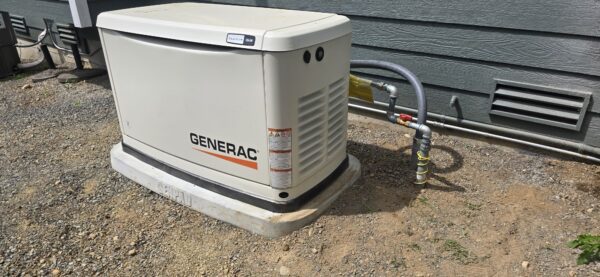
Generac Guardian 18kW standby generator installed beside a home by Bayless Electric

If a whole-home standby generator has been on your list, Generac just gave homeowners another reason to consider making the investment before fall and winter weather arrives.

From August 17 through September 27, 2026, homeowners who purchase a qualifying Generac home standby generator may be eligible to receive a FREE 10-Year Extended Limited Warranty, a value of $1,035.

For homeowners considering backup power, that means added protection for your investment at no additional cost.

What Qualifies for the Generac Promotion?

The promotion applies to qualifying Generac air-cooled home standby generators from 10 kW to 28 kW.

To qualify:

  • The qualifying generator must be purchased between August 17 and September 27, 2026
  • The generator must be installed and activated by January 1, 2027
  • The promotional redemption must be submitted online by January 1, 2027
  • The promotion is limited to qualifying models and one redemption per household
  • All redemptions are subject to Generac’s final review and approval

Not every generator model qualifies, so it is important to confirm eligibility before making your final selection.

Why Consider a Standby Generator?

Power outages do not always happen when it is convenient.

Windstorms, winter weather, equipment failures and other unexpected events can leave a home without power for hours or even days. A permanently installed standby generator is designed to automatically detect a power outage and provide backup power to selected circuits or, depending on the system, your entire home.

For many homeowners, that can mean keeping essentials such as:

  • Refrigerators and freezers
  • Heating systems
  • Well pumps
  • Sump pumps
  • Lighting
  • Internet and communication equipment
  • Medical or other critical equipment

running when utility power is unavailable.

The right generator size depends on your home, electrical system and which appliances or systems you want powered during an outage. Bigger is not automatically better. Proper sizing and installation are an important part of creating a reliable backup power system.

Thinking About a Generator? Now Is a Good Time to Start the Conversation.

The Generac promotion may run through September 27, but homeowners should keep the January 1, 2027 installation and activation deadline in mind.

Generator installation involves more than simply choosing a unit. Depending on your home, the process can include evaluating your electrical system, determining generator placement, selecting the appropriate equipment and coordinating installation.

Starting the conversation early gives you more time to understand your options and determine what makes sense for your home.

Bayless Electric can help you evaluate your backup power needs, answer questions about Generac standby generator options and determine the appropriate next step for your property.

Ready to Learn More?

Contact Bayless Electric to talk with our team about Generac standby generator installation and the current 10-Year Extended Limited Warranty promotion.

Bayless Electric
206-708-3105
baylesselectricllc.com
WA License: BAYLEEL823RC

Promotion terms, qualifying models and eligibility are determined by Generac. Qualifying generators must be purchased during the promotional period of August 17 through September 27, 2026, installed and activated by January 1, 2027, and redeemed online by January 1, 2027. Additional terms and conditions may apply.

The Electrical Upgrades Homeowners Wish They Had Done During Their Remodel


Electrical upgrades for a remodeled home by Bayless Electric

One thing electricians hear from homeowners after a remodel is:

“I wish we had thought about that while the walls were open.”

It is one of the most common regrets during remodeling projects.

When you are choosing cabinets, flooring, countertops, paint colors, fixtures, and finishes, it is easy to focus on what you can see.

But some of the most useful upgrades are the ones hidden behind the walls.

A remodel is the perfect time to think about how you actually use your home and what could make daily life easier.

Some of the upgrades homeowners often wish they had considered include:

  • Additional outlets in convenient locations
  • More kitchen countertop outlets
  • Under-cabinet lighting
  • Dedicated circuits for appliances
  • Better bathroom lighting
  • Additional garage or workshop power
  • Outdoor outlets
  • Landscape or security lighting
  • Wiring for a future EV charger
  • Data or internet wiring
  • Smart switches and dimmers
  • Dedicated circuits for a freezer, refrigerator, or equipment
  • Power for a future hot tub, heat pump, or outbuilding
  • Backup-power planning
  • Extra lighting in closets, pantries, or utility areas

Kitchens are a major example.

Homeowners often realize later that they needed more outlets, better task lighting, or dedicated power for appliances they did not originally plan for.

The same thing happens in garages and workshops. A single outlet may have worked years ago, but it may not be enough for tools, freezers, chargers, heaters, or future equipment.

Home offices are another area worth planning carefully. More people are working from home, and reliable power, lighting, internet access, and equipment placement matter more than they used to.

The biggest advantage of planning early is access.

Once drywall is installed and the walls are finished, adding new wiring can become more complicated and expensive.

That does not mean you need to install every possible upgrade right now.

It simply means it is worth having the conversation before the walls close.

You may decide to add conduit, reserve panel space, install wiring for a future project, or make a few small changes now that save a lot of trouble later.

Your home will likely continue to change over time.

A growing family, new technology, electric vehicles, a workshop, a home office, or another renovation can all affect how you use the electrical system.

A little planning during a remodel can save a lot of frustration later.

If you are planning a remodel, addition, or major home upgrade, Bayless Electric can help you think through your electrical needs today while preparing your home for tomorrow.

Call Bayless Electric at 206-708-3105 or contact us online to discuss your project.
WA License: BAYLEEL823RC

Can My Electrical Panel Handle an EV Charger?

Home EV charger mounted beside a house for Bayless Electric’s electrical panel guide

As electric vehicles become more common, one of the questions Bayless Electric hears most often is:

“Can my electrical panel handle an EV charger?”

The honest answer is that it depends.

Every home is different. The age of the home, size of the electrical service, current electrical demand, type of charger, and location of the installation can all affect what is needed.

Many homeowners assume they automatically need an EV charger panel upgrade before installing home charging equipment. Sometimes they do, but not always.

A professional electrical evaluation can help determine what your home can safely support before you purchase a charger or commit to a particular installation plan.

Not All EV Charging Is the Same

The first thing to understand is that not all electric vehicle charging is the same.

A Level 1 charger typically uses a standard 120-volt household outlet. It charges more slowly, but it may work well for drivers who do not travel far each day or who have plenty of time to recharge their vehicle overnight.

A Level 2 charger charges much faster but usually requires a dedicated 240-volt circuit. That additional electrical demand is where the capacity and condition of your electrical panel become especially important.

The U.S. Department of Energy’s guide to charging electric vehicles at home provides additional information about Level 1 and Level 2 charging equipment.

What an Electrician Reviews Before Installation

Before recommending an installation approach, an electrician should review several parts of the home’s electrical system, including:

  • The size of the electrical service
  • The condition and capacity of the existing panel
  • The number of available breaker spaces
  • The home’s current electrical load
  • Major appliances already in use
  • The electrical requirements of the selected charger
  • The distance from the panel to the charging location
  • Whether wiring must travel through finished walls, attics, crawlspaces, garages, or outdoor areas

The charger itself is only one part of the project. The installation route, wiring requirements, panel location, and existing electrical demand can all affect the final recommendation.

Why an Electrical Load Calculation Matters

An electrical load calculation helps determine whether the home’s existing system has enough capacity to safely support an EV charger.

This calculation considers the electrical demands already placed on the home, including heating and cooling equipment, water heaters, ranges, dryers, hot tubs, and other major appliances.

Having an open breaker space does not necessarily mean the electrical system has enough available capacity. The electrician must look at the entire electrical load, not only the physical space inside the panel.

In some homes, the electrical service may already have plenty of capacity for a Level 2 charger. In others, adding a high-demand circuit could place too much strain on the existing system.

When Is an EV Charger Panel Upgrade Needed?

An EV charger panel upgrade may be recommended when the existing electrical service cannot safely support the charger’s additional demand.

A panel or service upgrade may also be appropriate when:

  • The existing panel is outdated or in poor condition
  • There are not enough available breaker spaces
  • The home is already operating close to its electrical capacity
  • Other major electrical upgrades are being planned
  • The selected charger requires more power than the current system can provide

However, a full panel replacement is not always the only option.

Depending on the home, charger, and driving needs, load-management equipment or another installation approach may help support EV charging without immediately replacing the entire electrical panel.

Load-management equipment can help control when or how much power the charger uses based on the other electrical demands in the home. Whether that solution is appropriate depends on the equipment, electrical system, and installation requirements.

That is why the evaluation should come before the assumption that a major upgrade is necessary.

Why an Evaluation Is the Best First Step

An electrical evaluation gives you real information before you purchase equipment or assume the project will be more complicated than it actually is.

It can help answer important questions such as:

  • What charging level makes sense for your driving habits?
  • Can the existing electrical service support the charger?
  • Is there enough space in the panel?
  • Would load management be an option?
  • How will the charger be connected to the panel?
  • Will the installation require work in finished areas?
  • Are permits and inspections required?

Permits and inspections may be required depending on the equipment and installation. Bayless Electric can explain what applies to your project and help ensure the work is completed safely.

It is also helpful to have the electrical system evaluated before purchasing a charger. Charger requirements can vary, and buying equipment first may limit your installation options or result in purchasing a unit that is not the best fit for your home.

Plan Your EV Charger Installation with Bayless Electric

An EV charger is one of the most convenient upgrades an electric vehicle owner can make. Waking up each morning with a charged vehicle can make a significant difference compared with regularly relying on public charging stations.

The key is making sure the home’s electrical system is ready to support that additional demand safely and reliably.

Whether you already own an electric vehicle or are planning to purchase one, Bayless Electric can evaluate your electrical panel, complete the necessary load calculations, and help you understand whether an EV charger panel upgrade or another solution is appropriate.

Call Bayless Electric at 206-708-3105 or visit baylesselectricllc.com to discuss your EV charger installation.

My Breaker Keeps Tripping. Is That Actually a Problem?

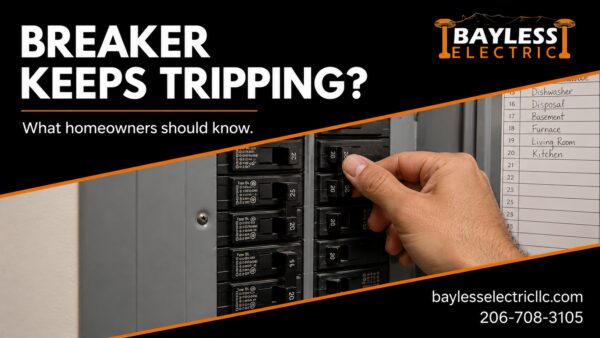
Bayless Electric graphic about a breaker that keeps tripping, featuring a residential electrical panel

One of the most common calls Bayless Electric receives starts with something like:

“My breaker keeps tripping, but I just keep resetting it.”

A tripped breaker is not always a reason to panic. In fact, the breaker is doing exactly what it was designed to do.

Circuit breakers are safety devices. They shut off power when they detect a condition that could overload the circuit, damage equipment, or create a safety concern.

The bigger question is not whether the breaker tripped.

It is why it tripped.

Sometimes the cause is fairly simple. You may have too many items running on the same circuit at once. This is common with things like:

  • Space heaters
  • Portable air conditioners
  • Garage refrigerators or freezers
  • Microwaves
  • Hair dryers
  • Power tools
  • Larger appliances

In those situations, turning off or unplugging one of the devices may solve the immediate problem.

To reset a tripped breaker, first turn off or unplug anything that may have overloaded the circuit. Then locate the breaker in the electrical panel. A tripped breaker may be sitting between the ON and OFF positions. Move it firmly to OFF first, then switch it back to ON.

If it resets and stays on, it may have been a temporary overload.

If it trips again, that is a sign to stop and look into the cause.

Repeated breaker trips can point to things like:

  • An overloaded circuit
  • A failing appliance
  • A loose electrical connection
  • Damaged wiring
  • Aging electrical components
  • A breaker that needs attention
  • An electrical panel that no longer meets the home’s needs

A breaker that trips once may not be a major concern.

A breaker that trips repeatedly is your electrical system asking for attention.

There are also times when you should leave the breaker off and contact an electrician instead of continuing to reset it. These warning signs include:

  • The breaker feels hot
  • You smell something burning
  • You hear buzzing or crackling
  • The breaker will not stay on
  • You notice discoloration near the panel
  • The issue keeps happening without an obvious cause

The breaker is reacting to a problem. Resetting it does not fix the problem behind it.

Electrical issues often start small. Finding the cause early can help prevent larger repairs, damaged equipment, or unexpected outages later.

Bayless Electric can help identify why the breaker is tripping, explain what is happening, and recommend the right solution for your home.

No pressure. No unnecessary upgrades. Just honest answers from a local electrical professional.

Call Bayless Electric at 206-708-3105 or visit baylesselectricllc.com.

How to Know When You Need an Electrical Panel Update in Anacortes

Electrical-Panel-Upgrade-Anacortes

The longer you live in your home, the more likely you are to need an upgrade to certain systems. Your electrical system needs to be on par with your lifestyle and the appliances in your home. Following are some indications you may need an electrical panel update in your home or business.

You Have Flickering Lights 

If you notice that your lights are flickering on a regular basis, this could be a sign that your panel should be upgraded. This usually happens when the circuit the lights are on is overloaded. Upgrading will rectify the issue. 

Your Circuit Breakers Are Always Tripping

Tripping breakers are a sure sign that a panel issue is present. If you have recently added or upgraded appliances, it may be time to do the same for your electrical panel. This will ensure that you don’t end up dealing with interruptions in your electrical service. 

The Panel Feels Warm

Any time you notice warmth on your panel, you need to think about replacing it or upgrading it. Warmth is a sign of overloading and it could be a serious safety issue that is presenting a fire hazard. An electrical panel update will help keep your home safe and ensure that you don’t run into any issues with an electrical fire. 

Need an Electrical Panel Update in Anacortes?

If you need home electrical work to make life easier, Bayless Electric is here for you. Whether it’s a new electrical panel, addition of a backup generator, home automation, or any other electrical service, our team can make sure your needs are met efficiently and affordably. And we’re committed to performing all work in as clean and green a way as possible. Contact us today for the best in electrical work.

Professional Electrical Panel Update in Anacortes

Serving Stanwood, Camano, Arlington, Anacortes, La Conner, Conway, Mount Vernon, Burlington, Bow, Edison, Bay View, Big Lake, Oak Harbor, Coupeville, Greenbank, Freeland, Langley, Clinton, Warm Beach, Lake Goodwin, Lake Ketchum, Silvana, Sedro Woolley, Smokey Point, Marysville, Everett, Lake Stevens, Monroe, Mukilteo, Lynnwood, Bothell, Mill Creek, Brier & the cities of Northern Idaho

Posted on August 15, 2025 | Published by Ignite Local | Related Local Business